Revive Dead Leads via Official WhatsApp Cloud API | ViveLead
Revive dead leads on the Official WhatsApp Cloud API: the 24-hour rule, current India rates, and how to message old inquiries without getting banned.

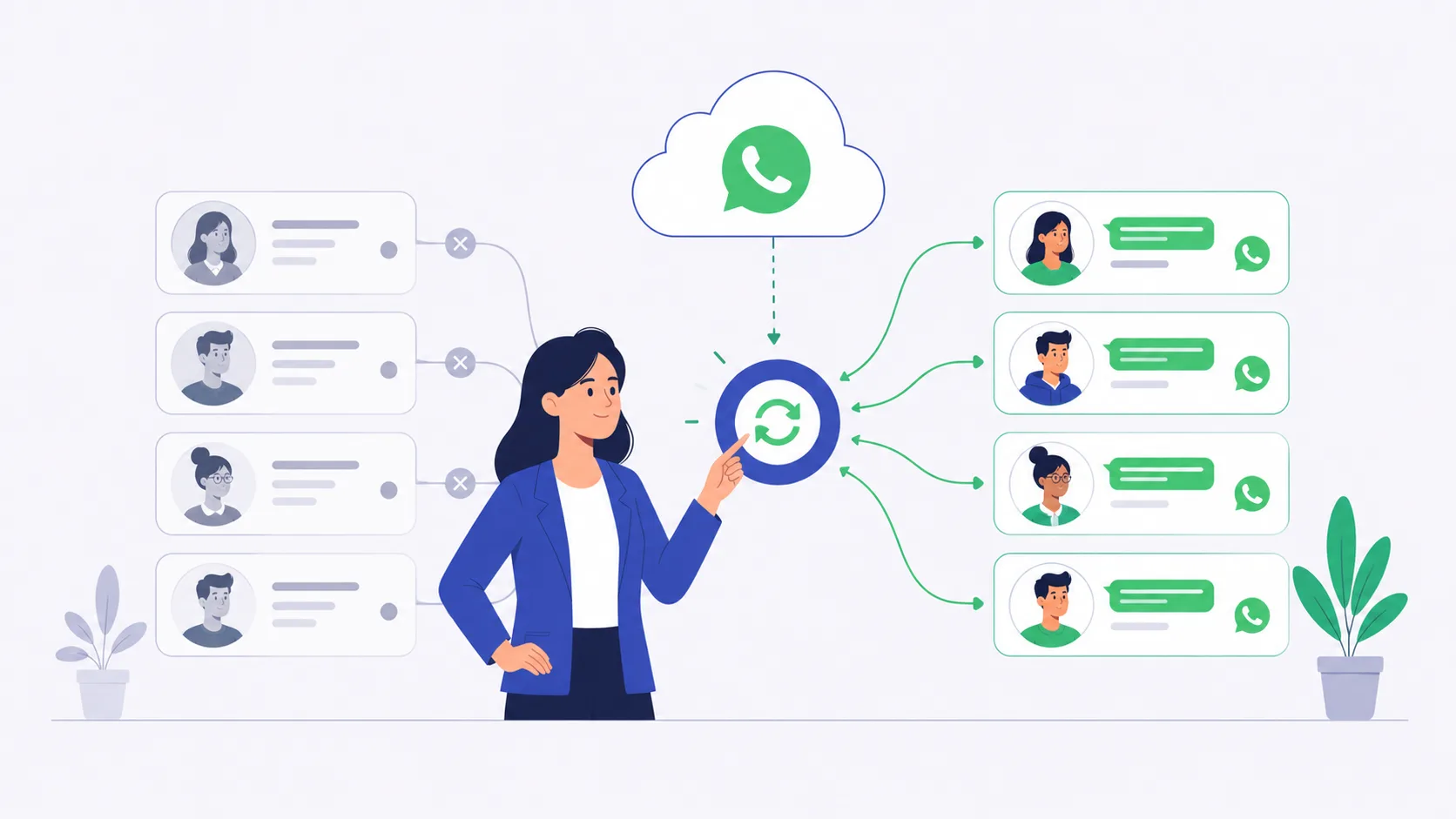
Your dead leads are not dead. Your team just never reached them
Here is the sentence that should bother you, from a sales manager quoted by the team at kraya-ai: “You get 50 leads, you manage to reach out to only 10-15, then they just sit in your database. Somewhere you’re missing your own leads.”
The leads did not fail. The team physically could not reach them, so they rotted in the CRM. That is not a lead-quality problem. It is a capacity problem wearing a lead-quality costume. Every coaching institute, study-abroad consultancy, and B2B sales team in India is sitting on a list like this: hundreds, sometimes thousands, of inquiries that came in from a Meta lead ad or a website form, got one or two touches, then went quiet because the counsellor was buried under this week’s fresh batch. You paid ad spend for every one of those names. They are the cheapest pipeline you will ever own, and most of you treat them like landfill.
This article is about getting them back through the Official WhatsApp Cloud API, which in 2026 is the only correct on-ramp for new WhatsApp integrations. We will be exact about the mechanic, because almost every “revive your dead leads on WhatsApp” guide is technically wrong in a way that gets your number throttled or banned: the 24-hour window, the marketing-versus-utility template call, the current India per-message cost, the compliance reality (DLT does not govern WhatsApp), and the templates that actually get replies.
The 50-leads-10-replies math every Indian sales team lives (and loses)
Fifty leads in, ten to fifteen worked, is a 70 to 80 percent abandonment rate at the top of your own funnel, before quality, before budget, before fit. Stack it week over week and a mid-sized institute pulling 200 inquiries a month while working 60 properly generates roughly 140 abandoned leads monthly. After six months that is 800-plus people who raised their hand and heard nothing. As the groweasy team, who run lead generation for Indian coaching institutes, put it: “counsellors who stop chasing a lead after an unanswered message are leaving admissions on the table.” The list is not dead. It is abandoned.
Why an old Meta-lead-ad list is the cheapest admissions channel you already own
A fresh lead costs money. India education cost-per-lead benchmarks swing with campaign, city, and course, but credible 2025 figures land in the rough range of Rs 50 to Rs 400 per form-fill, and that is only the form, not the admission. One campaign in LeadSquared’s higher-education resource reported Sapiens IAS landing 560 admissions at a blended cost of roughly Rs 2,522 per admission. Treat these as published operator figures and verify against your own ad account, but the direction is not in dispute: getting a brand-new interested human into your pipeline costs you somewhere from a few tens to a few thousand rupees.
A marketing template message to revive an old one costs roughly Rs 0.86 in India today (exact number below). That is the entire economic thesis in one comparison, and almost nobody publishes it with current rates: you re-open a conversation with a lead you already paid to acquire for less than one rupee. This is the same logic that makes working old leads beat buying new ones almost every time.
Dead inquiry vs dormant student: the funnel this article is actually about
One precise distinction, because it is where most “re-engagement” content gets muddy. A dormant enrolled learner (paid, started a course, stopped showing up) is a retention and LMS problem; tools in that space, CampaignHQ being the closest, lump it together with lead revival, which is a mistake. This article is about the dead sales inquiry: someone who came in from a Meta ad or website form, expressed interest, never enrolled, went cold. They were never your student. The mechanic, cost, and compliance for this group are specific. When we say “dead lead,” we mean the abandoned inquiry, not the lapsed customer. If your problem is moving fresh inquiries to enrolled in the first place, the 7-day enrollment funnel playbook is the companion to this one.
What “Official WhatsApp Cloud API” actually means in 2026 (and why old advice is now wrong)
If you searched “Official WhatsApp Cloud API” and landed on a blog written in 2023, throw it out. The ground moved, and most articles never updated.
Cloud API vs the dead On-Premise API: what the October 2025 sunset changed
For years there were two ways to access the WhatsApp Business Platform: the On-Premise API (self-hosted) and the Cloud API (hosted by Meta). That choice is over. Per Meta’s own developer documentation, the On-Premise API client reached its final supported version and stopped being able to send messages to WhatsApp users as of 23 October 2025. New On-Premise sign-ups ended back in mid-2024, and business phone numbers can now only be registered on the Cloud API; try the old path and you get an error.
In plain language: the Cloud API is the only on-ramp for any new WhatsApp integration. If a vendor or a blog still talks about self-hosting your WhatsApp API, the advice is dead. Any revival strategy you build in 2026 runs on the Cloud API. (Sources: Meta for Developers, On-Premises API Sunset documentation.)
Meta-hosted, no platform fee, and what going through a provider buys you
The Cloud API is hosted on Meta’s infrastructure. You do not provision a server or maintain uptime, and Meta does not charge a platform subscription fee for the API itself, there is no “WhatsApp API rental” line item. What you pay Meta is the per-message cost (the marketing or utility template fee, covered below) and nothing else for the pipe. With no infrastructure to stand up, a number can be live in well under an hour once your business is verified, versus days in the old self-hosted world. You can integrate directly with Meta, or go through a provider that adds tooling, a dashboard, template management, support, and integrations on top, typically for a small per-message markup or platform fee. Neither path changes the underlying Meta rules: the 24-hour window, the template categories, and the per-message pricing are Meta’s, direct or not. For the wider WhatsApp tooling landscape in India, the WhatsApp CRM buyer’s guide compares options by use case, including when not to pick a full CRM at all.
Where ViveLead fits: native WhatsApp Business on the Professional plan, Meta billing your own WABA
Per our own pricing page: ViveLead is a full CRM, and native WhatsApp Business is included from the Professional plan at Rs 999 per user per month, giving you templates, broadcasts, and a marketing inbox alongside your sales pipeline, with no separate setup fee. The billing model matters: Meta bills its per-message charges directly to your own WhatsApp Business Account (WABA). You set up the WABA, the charges land on your Meta bill, and ViveLead does not mark them up. So when this article quotes “roughly Rs 0.86 per marketing message,” that is Meta’s charge to you, not a marked-up number. The CRM is the seat fee; the messages are billed by Meta at cost, which is why a revival campaign can cost so little.
The 24-hour window: the one mechanic every revival guide gets wrong
This is the most important section in the article, and the one almost every competing guide skips. If you take nothing else away, take this.
A cold lead is by definition outside the 24-hour window
WhatsApp has a customer-service window, exactly 24 hours long, starting every time a customer messages you and lasting 24 hours from their last inbound message. Inside it, you can send free-form messages: normal text, replies, anything, no template required. Now apply the definition of a dead lead: someone who last messaged you weeks or months ago, or who only ever submitted a form and never messaged you on WhatsApp at all. In both cases the window is firmly closed. You cannot type a friendly “Hi, are you still interested?” and hit send, because the platform will not deliver a free-form message to a contact outside the window. That is the technical wall naive revival advice ignores.
Why your first touch MUST be an approved template, not a normal message
Outside the window, the only thing WhatsApp lets you send is a pre-approved template message: a format you submit to Meta in advance, which Meta reviews and approves. So your first revival touch to a cold lead is never a normal message, it is always an approved template. And because you are re-opening a cold sales inquiry, not sending a transactional update they expect, that template is a marketing template: paid, opt-in required. “Just send them a friendly check-in” is advice that cannot physically execute on the Cloud API for a cold lead; the check-in has to be a structured, approved, paid marketing template, or it does not go out at all.
How a single reply reopens a free 24-hour conversation
Here is what makes the whole thing economical. The moment your cold lead replies, even one word, a fresh 24-hour window opens, and inside it you can send free-form messages again: answer questions, send the fee structure, book a demo slot, all without further template charges for that session. So the economics are one paid marketing template to get back in the door (roughly Rs 0.86 to knock), then a free conversation window the instant they engage. Every reply converts a paid knock into a free conversation, which is exactly why scoring your list and messaging the leads most likely to reply matters so much.
The flow in one loop: template out, reply in, window opens, you sell
- Template out. Lead is cold, window closed, so you send one approved marketing template (paid, opt-in required). Your knock on the door.
- Reply in. The lead responds. Even a one-word reply counts.
- Window opens. Their reply opens a fresh, free 24-hour session.
- You sell. Inside that free window you have a normal human conversation: qualify, send details, book the demo, move them into your pipeline.
Any guide that says “message your old leads” without explaining steps 1 and 3 is handing you advice that breaks on contact with the platform. (The 24-hour window and template rules live in Meta’s Business Messaging Policy and platform pricing documentation; the practical framing aligns with operator guidance including Orbixel Labs.)
Marketing vs utility templates: the category decision that controls your bill and your deliverability
Template category is a money decision and a deliverability decision at once, and almost no India revival guide explains it. Get it wrong and you overpay, get templates rejected, or get your number flagged.
Why reactivating a cold lead is always a marketing template
WhatsApp sorts templates into categories; the two that matter here are marketing and utility. A utility template supports a transaction the customer already expects: an order confirmation, a shipping update, a reminder for an appointment they booked. It is cheap. A marketing template promotes, re-engages, or nudges: an offer, a new-batch announcement, a “we noticed you were interested” re-activation. It costs more and requires prior opt-in. Reviving a cold sales inquiry is, by definition, marketing: you are pulling someone who went quiet back toward a purchase. There is no honest way to classify “Hi, our new NEET batch starts Monday, are you still interested?” as utility. So your revival template is a paid marketing template that requires opt-in, which is exactly why the compliance section below matters.
The trap of disguising marketing as utility (and why it gets numbers blocked)
Because marketing costs more, there is a tempting shortcut: write a marketing message but label it utility for the lower rate. Do not. Meta categorises templates on review and increasingly re-categorises based on actual content, and deliberately mislabeling a promotional message as utility is a Business Messaging Policy violation. The downside is not just a corrected bill: repeated miscategorisation feeds the signals Meta uses to throttle or restrict a number. You would be risking your sending ability to save a few paise. Price the revival as the marketing campaign it is, and protect the number.
Current India per-message rates: roughly Rs 0.86 marketing vs roughly Rs 0.115 utility (verify at publish)
Verify these against Meta’s live rate card before you budget, because they moved on 1 January 2026, when Meta’s India marketing template rate rose roughly 10 percent, from about Rs 0.7846 to about Rs 0.8631 per delivered marketing message. Utility and authentication templates sit far lower, at roughly Rs 0.115 per message, and service replies (free-form messages inside an open window) are free. This follows Meta’s July 2025 shift from per-conversation to per-delivered-message billing: you are charged for each individual template delivered, not per 24-hour conversation. (Sources: Meta for Developers WhatsApp Business Platform pricing documentation; AiSensy’s January 2026 India pricing update.) Two consequences: a sloppy blast to a list full of dead numbers now wastes real money on undeliverable sends, and the marketing-versus-utility gap is large enough to genuinely move your campaign budget at volume.
Template approval in practice: what gets approved fast, what gets rejected
Review is typically done within a day. The pattern:
- Approved fast: clear, specific copy with proper variable placeholders, an honest category, and a recognisable sender. “Hi {{name}}, your CAT 2026 batch enquiry from {{institute}}, the new batch starts {{date}}. Want the fee details? Reply STOP to opt out.” reads like a legitimate marketing message and behaves like one.
- Rejected or slow: vague spam (“Congratulations!!! Amazing offer just for you!!!”), all-caps urgency, missing variables, mismatched category, or anything that looks bound for an unconsented list. Excessive emoji and clickbait punctuation also trip the filters.
Write like a human talking to one person who once raised their hand, name the specific thing they wanted, and you clear review quickly and perform better once live.
The revival math: less than Re 1 to message a lead you already paid thousands to acquire
Acquiring a brand-new lead is the expensive part: India education CPL benchmarks run roughly Rs 50 to Rs 400 per form-fill, the LeadSquared-cited Sapiens IAS campaign reported a blended cost of roughly Rs 2,522 per admission, and many single-teacher institutes run their entire monthly admission pipeline on Rs 3,000 to Rs 5,000 of ad spend (groweasy, superads benchmarks). Hedge them all and check your own account, but the takeaway holds: a fresh, ready-to-talk lead costs you somewhere from tens of rupees at the form stage to thousands at the admission stage.
A lead you already acquired and abandoned costs roughly Rs 0.86 to message again: one marketing template on the Cloud API, with the next 24 hours free if they reply. Put the two side by side: acquire fresh, tens to thousands of rupees; revive existing, under Re 1. No other channel in your stack has that ratio.
A worked example: scoring 1,000 old inquiries, messaging the best 300
Round, clearly illustrative numbers (an example, not a case study, and not a promise of results):
- You have 1,000 old, opted-in inquiries in your CRM, abandoned over the last six months.
- You score them and message only the top 300 most-likely-to-reply: recent, engaged, right course, valid consent.
- 300 marketing templates at roughly Rs 0.86 each is about Rs 258 in Meta charges. That is the entire spend to knock on 300 doors.
- Every reply opens a free 24-hour window, so follow-up conversation cost is zero for the session.
Two hundred and fifty-eight rupees to re-open 300 conversations you already paid to start. Whatever your reply rate turns out to be, the cost side is so small the campaign is almost impossible to lose money on, provided you do not torch your number by blasting the wrong way. Which is why you do not skip scoring and blast all 1,000: a generic spray at a cold list generates blocks that hammer your quality rating (one Mumbai agency relayed by kraya-ai sent 5,000 generic messages and collected 600 blocks in 72 hours, landing a Low Quality flag, treat as illustrative), and per-delivered-message billing means every send costs money whether or not it lands well. Score first, message your best, watch the quality rating, then expand. This is precisely what lead scoring exists to do: tell you which leads are worth a paid touch.
How to follow old leads without getting your number banned (the fear nobody answers)
This is the question every operator actually has and almost no article answers head-on: “How do I follow up old leads without my number getting banned?” It is the silent objection blocking every revival attempt.
Quality rating, and the block-rate line operators watch
Meta assigns every sending number a quality rating, shown as High (green), Medium (yellow), or Low (red), calculated from how recipients react over a rolling window, with blocks and “report spam” the heaviest negative signals. High means full messaging limits and smooth approvals; Low means Meta restricts your number with lower limits, slower or denied template approvals, and in the worst case a ban. The single biggest driver of a falling rating is people blocking you, so the whole game of safe revival is getting as few blocks as possible. Operators who run WhatsApp at volume cite rough thresholds (via kraya-ai, operator rules of thumb, not official Meta numbers): a block rate under 2 percent is generally safe, while a sustained rate above 4 percent is the danger zone that triggers quality drops and restrictions. If your campaign generates blocks above that band, stop and fix targeting and copy before continuing.
Block vs opt-out: why a STOP reply protects you and a block hurts you
This is the most important deliverability insight in the piece, and it changes how you write every template. A block is a recipient telling WhatsApp “this sender is unwanted.” It damages your quality rating and eats into your 7-day quality window; a few are survivable, a wave is not. An opt-out (the lead replies “STOP” and you stop) is, by contrast, reputation-neutral: the lead leaves quietly without filing a negative signal against your number. So the counter-intuitive takeaway is that you want to give people an easy way to leave. Every revival template should carry a clear STOP line, not just because it is polite and compliant, but because it actively protects your number: a lead who would have blocked you (hurting your number) instead replies STOP (neutral). The STOP line is a deliverability tool disguised as a courtesy.
Warming up: send to your most-likely-to-reply leads first, not the coldest
Because quality rating is built from reactions, sequence your sends to generate good reactions early. Start with your warmest leads: recent inquiries, people who previously engaged, the right course fit. They are most likely to reply and least likely to block, so their engagement props up your quality rating before you touch the colder, riskier segments. Then expand in waves, watching the rating and block rate after each; if the numbers stay green, send the next, slightly colder wave; if they wobble, stop. Warmest-first is the single most effective way to revive a large list without getting banned, and the reason scoring is step one.
DLT, TRAI, and DPDP: the India compliance reality for WhatsApp revival
The compliance layer is pure whitespace: no competitor revival guide explains it correctly for India. Getting it right is both legally necessary and a genuine trust signal.
Myth-buster: DLT/TRAI governs SMS and voice, NOT WhatsApp
The most common confusion: “Do I need DLT registration to send WhatsApp marketing in India?” The answer is no. DLT registration under TRAI’s TCCCPR framework is mandatory for SMS and voice-call marketing, the system behind registering sender IDs and templates with the telecom operators. But it governs the telecom channels, not WhatsApp; WhatsApp does not run on Indian telecom DLT rails. As the Orbixel Labs guidance puts it: DLT and TCCCPR govern SMS and voice, while Meta’s own policy governs WhatsApp. If a vendor tells you that you need DLT registration to send WhatsApp messages, they do not understand the channel. What does govern your sending is Meta’s Business Messaging Policy (with the WhatsApp Business Terms): the 24-hour window, the template categories, the opt-in requirement for marketing, the prohibited-content list, and the quality-and-blocking enforcement. Two rulebooks for two channels, and people constantly apply the wrong one.
DPDP Act 2023: documented opt-in required, no exception for dormant contacts
India does have a law that bears directly on this, and it is not a telecom rule. The Digital Personal Data Protection (DPDP) Act 2023 governs how you handle personal data, including phone numbers, for marketing, and the core requirement is consent: a documented, informed opt-in before you process someone’s data to send them marketing. Crucially, there is no special exception for dormant contacts. “But they inquired eight months ago” does not create fresh consent if you never had documented opt-in to begin with. If anything, the further back the original interaction, the more important it is that you can point to the moment they agreed to be contacted.
So which old lists are fair game? The line is consent provenance. Valid opt-in (revive these): a lead who filled your website form and agreed to be contacted, or who submitted a Meta lead-ad form (consent language built in). Not valid opt-in (do not touch): numbers scraped from JustDial, bought from a list vendor, or lifted from a directory; messaging these is both a DPDP problem and a fast track to a banned number, because strangers who never opted in block aggressively. This is the honest line competitors avoid: responsible revival means messaging only leads who once opted in. And a list you captured yourself, through your own website forms and Meta lead ads, is by construction an opted-in list, exactly the kind of first-party lead capture ViveLead is built around. The compliant move and the cheap move are the same move.
ViveLead and your data
Stated accurately: data is hosted in India, encrypted in transit and at rest (AES-256), access is controlled with role-based access control (RBAC) so each team member sees only what they need, and the platform follows GDPR principles and operates under the IT Act 2000. That is the complete and honest list. ViveLead does not claim ISO 27001 or SOC 2 certification, and certifications like HIPAA and FERPA do not apply to an Indian CRM at all. When you are storing a list of opted-in leads and their conversation history, India hosting plus RBAC plus encryption is the relevant, real story.
Triggers beat “days inactive”: the Indian admissions revival calendar
Competing pages use a one-size dormancy ladder: message at day 7, day 14, day 30. That is built for e-commerce, not Indian admissions. The Indian admissions buyer does not run on “days since last contact,” they run on a calendar of deadlines. Trigger your revival off the calendar, not the clock.
The single most powerful trigger for a coaching institute is a new batch start date. A lead who went cold in April is a different prospect the week before your June batch begins, because now there is a concrete reason to decide now. “Your enquiry for our {{exam}} batch, the new batch starts {{date}} and seats are limited” beats a generic “checking in” every time. The second trigger is a money deadline: scholarship cutoffs, early-bird fee discounts, limited-period offers, all dated reasons to re-engage now (“Early-bird fee for the {{date}} batch closes on {{deadline}}”). Note the overlap, this is unambiguously a marketing template, so paid and opt-in-only.
For study-abroad and overseas-education consultancies the calendar is even more rigid and the pain sharper. The SmartX team describe the core problem as “lost leads where students inquire but follow-ups fall through the cracks,” compounded by “application chaos” and “missed deadlines for university intake dates,” with some operators reportedly losing 30 to 40 percent of inquiries to delayed or missed follow-ups (operator figure, hedge it). The triggers write themselves: university intake dates, application windows, and visa deadlines. A student who inquired about a Fall intake and went quiet is a perfect revival target as that application deadline approaches.
Name the exam (CAT, UPSC, NEET, GMAT), not “the course”
Specificity is the difference between a reply and a block. The kraya-ai team report a personalised first line gets roughly 4 to 6 percent reply rates versus roughly 2 percent for a generic blast (operator figures, illustrative), and their framing is sharp: “when a doctor, a newlywed, and a property investor all get the same message, all three feel spammed.” For coaching, the personalisation that matters most is naming the exam: not “your course enquiry” but “your CAT 2026 preparation enquiry,” or UPSC, NEET, GMAT, whatever they actually asked about. It proves you remember them and separates your message from the generic spam they get from everyone else, which is why your CRM must store the course or exam as a field on the lead, ready to merge as a variable.
How many follow-ups before a lead is truly dead? (Spoiler: more than you think)
Before you write off a lead, ask how many times you actually tried. For most teams the honest answer is “once or twice,” and that is not a dead lead, it is an abandoned one. The groweasy team state it directly: most coaching admissions happen after the third, fourth, or fifth follow-up, and counsellors who stop after one unanswered message are leaving admissions on the table. If your team gives up after one or two touches (which the 50-leads-10-replies math says they do), you are abandoning leads right before the point at which most would have converted.
A practical revival cadence for an opted-in cold lead, spacing the touches so you persist without nagging:
- Touch 1, hour 0: the marketing template that re-opens the door (named exam, named trigger, STOP line).
- Touch 2, +72 hours: if no reply, a second angle, a different trigger or value point (a topper result, a new batch detail).
- Touch 3, +1 week: a deadline-led nudge (batch start, fee cutoff) if one applies.
- Touch 4, +2 weeks: a final, soft, “last call before this intake closes” message.
Each is an approved marketing template (cold lead, closed window), each carries STOP, and the moment any gets a reply you drop the cadence and switch to a human conversation in the now-open free window. What makes that cadence hard is not the leads, it is the counsellor hours: running a four-touch sequence across hundreds of old leads by hand is impossible, which is exactly why teams abandon them. The fix is automation, a CRM that fires the templated touches and surfaces only the leads who reply, so your counsellor spends time on live conversations, not on remembering to send touch three to 400 people. The enrollment funnel playbook goes deep on why capacity, not lead quality, is usually the real constraint.
Now the honest counterpoint, because not every lead deserves revival. The bloomagency team note that a real share of form-fills are “students who filled out forms by mistake, were just curious, or lacked budget or decision-making power,” and groweasy separate volume from quality with the line “100 enquiries, 3 converting is a quality problem, not a volume problem.” Both are true at once: some of your fills are genuine junk, and most of your dead list is real once-interested people you never worked. That is precisely why you score before you blast. A lead is genuinely dead, and should be archived rather than chased, when a full opted-in revival sequence gets zero response across multiple triggers, or it was clearly never a real fit (mistaken fill, no budget, wrong geography, replied STOP). Archive those and put your message budget behind the leads that still have a pulse.
The revival template that gets replies (steal these patterns, not the spam)
Steal the patterns, not the spam. Every example below is opt-in-only and carries a STOP line, both because it is compliant and because the STOP line protects your number. The winning cold-revival structure, distilled from operator practice (kraya-ai), has four parts:
- Acknowledge prior interest. Reference the specific thing they inquired about. Proves you are not spamming a stranger.
- Signal a change. Give a reason this message is happening now: a new batch, a deadline, a price change, a scholarship window.
- Ask one question. One. A single, easy-to-answer qualifying question that invites a reply and opens the free window.
- Add STOP. A clear opt-out line. Reputation insurance.
That structure clears review, reads like a human, and is built to generate a reply (which opens your free window) rather than a block (which kills your number). One pattern operators consistently trust is the warm “we miss you” re-entry opener. Classpro’s compassionate re-engagement template runs along the lines of “Hi [Name], we miss you at [Institute]. Life happens… flexible re-entry starting [Date],” and they report it recovering 15 to 20 percent of dropped students (strictly the operator’s claim, not a guarantee). The honest boundary: that pattern is built for dropped students, so adapt it for a cold inquiry rather than copying it verbatim, an inquiry was never “at” your institute to be missed. The transferable lesson is the warmth, lead with empathy and a low-pressure door.
Patterns you can adapt (replace the variables, submit for approval, opt-in lists only):
- Coaching / test-prep, new-batch trigger: “Hi {{name}}, you’d enquired about our {{exam}} coaching at {{institute}}. Our new batch starts {{date}} and a few seats are still open. Want me to send the fee structure and schedule? Reply STOP to opt out.”
- Test-prep, deadline trigger: “Hi {{name}}, the early-bird fee for our {{exam}} {{month}} batch closes on {{deadline}}. You’d shown interest earlier, so I wanted you to have the chance. Should I share the details? Reply STOP to opt out.”
- Study-abroad, intake trigger: “Hi {{name}}, you’d enquired about {{country}} admissions for the {{intake}} intake. The application window closes soon and a few university options still have room. Want a quick shortlist? Reply STOP to opt out.”
Each one acknowledges the specific prior interest, signals a dated change, asks exactly one question, and carries STOP. The non-negotiable rule across all of them is to personalise the first line with the specific exam or country and a real deadline. “Your course enquiry” is a blast; “Your CAT 2026 enquiry, batch starts 15 July” is a revival. The kraya-ai 4-to-6-percent-versus-2-percent reply gap is almost entirely about this first line. Generic blast equals blocks equals dead number; specific, named, dated equals replies equals a re-opened pipeline.
From dead list to booked demo: wiring revival into your CRM
The mechanics above are platform-agnostic, true no matter what tooling you use. Here is the honest ViveLead path, grounded entirely in our pricing, to wire revival into one system instead of stitching it together by hand. A map, not a pitch, with each capability on the tier where it actually lives.
It starts before a lead ever goes cold. On the Starter plan at Rs 499 per user per month, ViveLead captures leads from website forms into one place, source tagged at creation, and Meta lead ads join on Professional. That is the foundation, for two reasons. First, a self-captured list of website-form and Meta-lead-ad inquiries is, by construction, an opted-in list, the only kind you are allowed to revive under DPDP. Second, capturing every source into one system means your “dead list” is a queryable list, not scattered across a WhatsApp inbox, a Meta Business Suite tab, and three spreadsheets. (Note: Starter includes website-form capture, but not Meta lead-ad capture or native WhatsApp sending, that is Professional.)
The revival itself runs on the Professional plan at Rs 999 per user per month, which adds native WhatsApp Business: templates, broadcasts, and a marketing inbox. This is where you build and send your approved marketing templates, run them in waves across your scored segments, and handle replies in the marketing inbox as they open free 24-hour windows. Meta bills the per-message charges (roughly Rs 0.86 per marketing template) directly to your own WhatsApp Business Account, at no markup from ViveLead, so the under-Re-1 math here is the real cost, not a marked-up reseller rate. The full WhatsApp picture, and an honest take on when a dedicated WhatsApp tool beats a CRM, is in the WhatsApp CRM buyer’s guide.
Professional also includes lead scoring (configurable hot, warm, and cold buckets), the piece that ties the discipline together: it decides which old leads earn a paid marketing template and which get archived, the mechanism behind “message your best 300, not all 1,000” and warmest-first wave sending. And the point of revival is not a reply, it is a booked demo, so close the loop: every plan has deals, pipelines and appointments, and Professional adds public booking links and workflow automations. A revived lead who replies moves into your pipeline, the booking link lets them self-serve a demo slot inside the free window, and follow-up automations keep the now-warm lead from going cold a second time. For the side-by-side cost comparison against the usual enterprise suspects, the ViveLead vs HubSpot and ViveLead vs Salesforce breakdowns lay out the India pricing math.
A 7-day plan to revive your dead lead list (start tomorrow)
Enough theory. Here is the executable week-one plan. Everything in it reinforces the same three disciplines: opt-in only, score before you send, STOP line always.
Day 1-2: pull the list, confirm opt-in provenance, score and segment. Pull every old, untouched lead from your CRM. For each, confirm opt-in provenance: was it a website form or a Meta lead ad where the person agreed to be contacted? Keep those. Anything scraped, bought, or of unknown origin gets removed now, not later, because it is both a DPDP problem and a quality-rating grenade. Then score and segment the survivors by recency, course or exam fit, and prior engagement, and identify your top “message first” bucket. By end of Day 2 you have a clean, consented, ranked list.
Day 3-4: write and submit marketing templates per trigger, set the STOP line. Write your revival marketing templates, one per trigger that applies to your calendar (new batch, fee deadline, intake window). Use the four-part pattern, name the specific exam or country as a variable, and put a clear STOP line in every single one. Submit to Meta for approval (allow about a day). While you wait, set up your sending waves: which segment gets which template, in which order, warmest first.
Day 5-7: send in waves to highest-score leads first, watch quality rating, route replies. Once approved, send in waves, highest-score leads first. Send the top wave, then watch: what is the block rate, where is the quality rating? If blocks stay under the ~2 percent comfort line and quality holds green, send the next, slightly colder wave; if blocks climb toward the ~4 percent danger band, pause and fix targeting or copy. As replies come in they open free 24-hour windows, so route those replies into your pipeline, have counsellors handle them as live conversations, and book demos via the booking link. Never blast the whole list in one shot; the wave discipline is the entire safety mechanism.
What good looks like. Track these from day one (none of them is an invented promise, they are your own numbers to measure): reply rate per segment and per template (refine toward the winners); quality rating and block rate after each wave (your safety dashboard, green and under 2 percent means keep going); demos booked from revived leads (the real output, replies are nice but booked demos pay rent); and cost per revived inquiry and per booked demo (total Meta message spend divided by replies, and by demos), compared to your fresh-lead CPL. That last number is what proves to you, and your CFO, that the old list is the cheapest channel you own.
Whatever tool you use, this plan works: clean the list, score it, write specific opted-in templates with a STOP line, send warmest-first in waves, and route the replies into a real conversation. The leads were never dead. They were waiting for you to knock the right way.
WhatsApp Cloud API Lead Revival FAQs
The ban risk, the costs, the compliance line, and where ViveLead fits, answered straight
Related reading
- WhatsApp CRM in India: Buyer’s Guide: which WhatsApp tool fits your team, and when not to pick a full CRM.
- EdTech Lead to Enrollment in 7 Days: the follow-up cadence and counsellor productivity that turn revived leads into admissions.
- Smart Lead Capture: how to build the clean, opted-in list that revival depends on.
- AI Sales Assistant and Lead Scoring: scoring leads so you message the right ones first.
- What Is CRM?: the beginner’s guide if you are still running leads off spreadsheets.
- ViveLead Pricing: Starter Rs 499 for capture, Professional Rs 999 for native WhatsApp revival.
Coaching CRM by city: Delhi NCR, Mumbai, Bangalore, Hyderabad, Chennai, and Pune. The EdTech CRM hub maps the full feature set.
Start Your Free CRM Trial
Capture leads on Starter from Rs 499/user, revive them with native WhatsApp Business on Professional from Rs 999/user. No credit card required.
Continue Reading
Why Your EdTech Needs a Shared WhatsApp Inbox | ViveLead
Counsellors close students on personal WhatsApp, then walk out with the chats. Why your Indian EdTech needs a shared …
Sync Meta Lead Ads to WhatsApp CRM Natively | ViveLead
Sync Meta lead ads to a WhatsApp CRM the right way: native capture, no BSP markup, own your WABA. India and EdTech …
Why Email Fails: Marketing Automation for Education
Email fails for Indian admissions as a channel, not as copy: Meta-lead-ad junk emails, inbox burial, and the 5-minute …