Why Your EdTech Needs a Shared WhatsApp Inbox | ViveLead
Counsellors close students on personal WhatsApp, then walk out with the chats. Why your Indian EdTech needs a shared WhatsApp inbox you actually own.

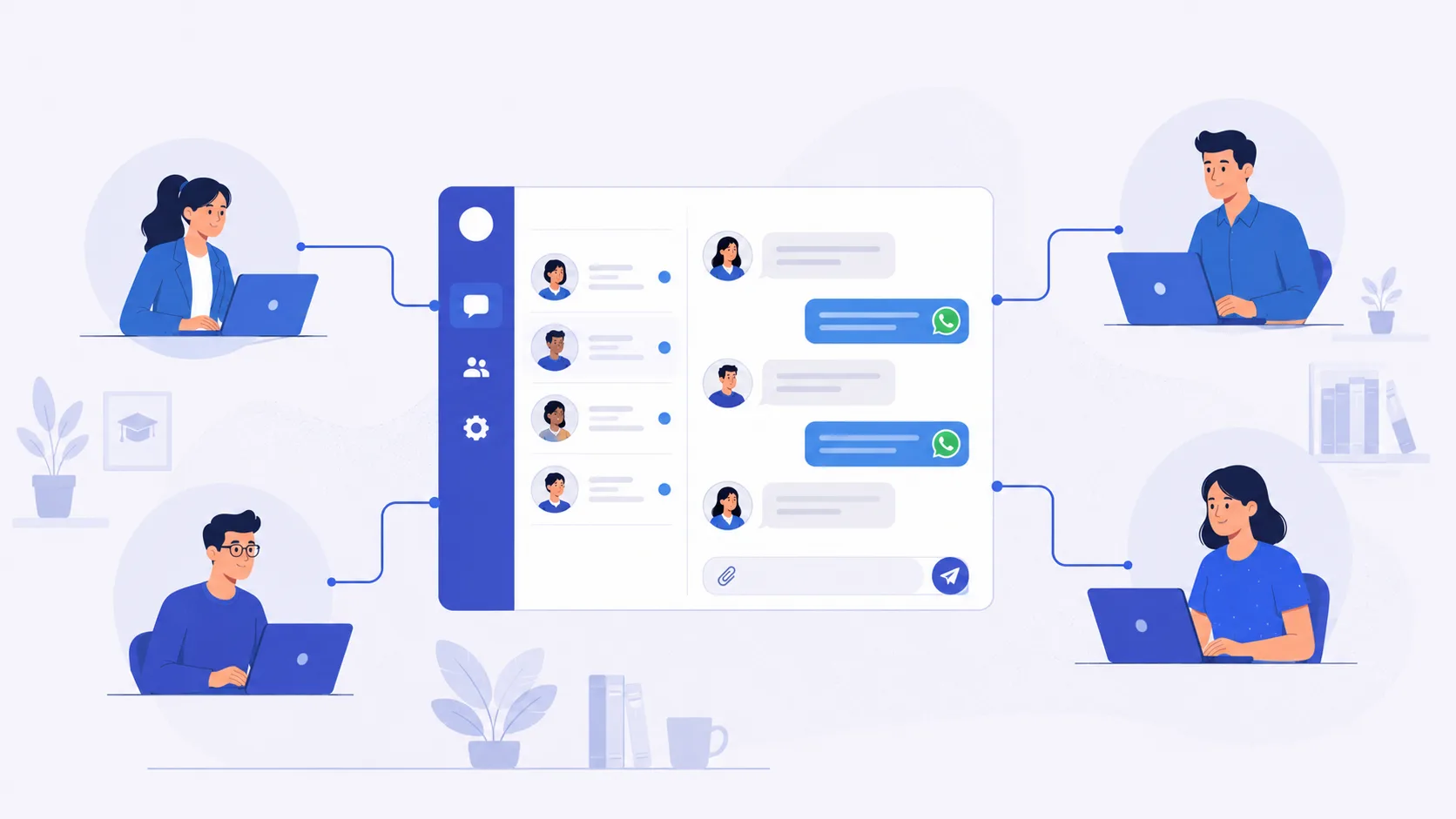
Your Best Counsellor Is Also Your Biggest Leak
It is the middle of intake season. Your strongest admissions counsellor is closing three students a day from her personal WhatsApp. Parents love her. They send her voice notes at 10pm, she replies, the fees get paid, the batch fills up. Then she resigns. She walks out with her phone, and on that phone is every parent relationship and every chat thread she built on your marketing spend. Two weeks later some of those parents are enrolling their kids wherever she landed, because the only number they ever knew was hers, not yours. That is not a loyalty problem you fix with a better appraisal. It is structural: your most valuable asset in an admissions business is the conversation, and right now your conversations live on a device you do not own and cannot audit, reassign, or hand over.
A shared WhatsApp inbox fixes the thing the listicles never name. It is not a collaboration nicety so two people can “help each other reply.” It is how an EdTech keeps the asset when the person leaves. One WhatsApp Business number, every counsellor working it together, every chat owned by the institution. When someone resigns mid-intake, you reassign their open conversations to the next counsellor and the parent never notices a seam. The relationship stays with the brand, because the number and the record belong to the brand.
This article is the case for that, made specifically for Indian coaching institutes, test-prep centres, K-12 tuition chains, online course sellers, and study-abroad consultancies. We will dissect the personal-phone leak nobody dissects, walk a full intake-season funnel end to end, explain the one legal reason ownership beats loyalty, and tell you honestly where a shared inbox does and does not help.
The 11pm Click-to-WhatsApp enquiry nobody at the institute can see
Picture the enquiry that actually fills your batches. A parent in Indore is scrolling Instagram at 11pm, sees your Click-to-WhatsApp ad for a NEET dropper batch, taps “Send message,” and types “fees and timing?” On a personal-phone setup, that message lands on one counsellor’s WhatsApp. If she is asleep, it sits. If she is on leave, it sits. If she left the company last week and her SIM is deactivated, it vanishes, and you paid Meta for that click anyway.
Nobody at the institute can see that enquiry except the one person whose phone it hit. Not the owner, not the admissions head. There is no record it ever arrived. You spent money to start a conversation, and the conversation is invisible to everyone who could close it. A shared inbox makes that 11pm message land in one place the whole team can see, fires an instant acknowledgement so the parent knows they have reached a real institute, and assigns it to a counsellor who picks it up first thing. The difference between “vanished into a personal phone” and “captured, acknowledged, assigned” is the difference between a wasted ad rupee and an enrolled student. And note the trap in being proud of raw lead volume: the institutes that win intake season are not the ones with the most enquiries, they are the ones who lose the fewest. You can buy more leads tomorrow with more ad budget. You cannot buy back the warm parent who got no reply for 18 hours and enrolled elsewhere.
What a shared WhatsApp inbox actually is
Plainly: one WhatsApp Business number, many counsellors, full visibility. Every student and parent chat lands in a single inbox the whole admissions team works from. A chat can be assigned to a specific counsellor so it is clear who owns it. Counsellors can leave internal notes on a conversation (“parent wants EMI option, follow up Friday”) that the parent never sees. Collision detection warns when two people are typing in the same chat, so a parent does not get two different answers from two counsellors. And a manager can open any conversation, at any time, to see exactly what was said.
That is the whole idea, and it is deceptively powerful. It converts a pile of private, unauditable, personal-phone threads into one shared, searchable record of every admissions conversation your institute has ever had. New counsellor joins in week three of intake? They see the full history of the leads handed to them. Counsellor leaves? Their chats reassign in a click and the institution keeps everything.
If you want the broader landscape of WhatsApp tools first, our WhatsApp CRM buyer’s guide for India compares the main options honestly, including where not to pick us. This piece is narrower: why an EdTech specifically needs the shared, owned inbox, and what breaks without one.
The Real Disease Is Lead Leakage, Not Lead Generation
The operators who run admissions desks all day have a word for this, and it is not “lost leads.” It is lead leakage. The distinction matters. “Lost leads” sounds like leads you never had. “Leakage” names the truth: you had the lead, you paid for it, it entered your funnel, and it drained out through a gap in your process before anyone closed it.
CampaignHQ, an Indian operator that writes about exactly this, describes the leak in vocabulary every institute owner will recognise: “A student fills your form after seeing a Meta ad. A parent asks for fees on WhatsApp. Someone downloads your brochure from a landing page. Your counsellor calls once, maybe twice, and then the lead goes cold.” And the mechanic underneath it: “The lead goes to a counselor’s personal WhatsApp or sits idle in a sheet.” (CampaignHQ blog, operator observation, not a cited study.) Note what is happening there. The lead is not lost. It is sitting, on a personal phone or in a spreadsheet, going cold while nobody is assigned to keep it warm.
Erino, another education-CRM operator, names the same blind spot from the manager’s side: “Counselors operate on WhatsApp but the CRM doesn’t track it. Conversations live in personal phones,” and “Some leads get called five times in a day. Others are forgotten for weeks.” (Erino, operator observation.) Erino stops at visibility, which is real but is only half the wound. The other half is ownership: even with perfect visibility, if the conversation lives on a personal number, it still walks out when the person does.
Five places one enquiry hides
Here is why leakage is so hard to even see, let alone fix. A single intake-season enquiry can be hiding in five different places at once, and no one person can see all five:
- Meta lead-ad downloads sitting in Meta Business Suite that someone has to remember to export.
- Gmail, where a website form submission landed as an email nobody opened.
- WhatsApp chats scattered across individual counsellors’ personal phones.
- Phone logs, where a parent called the front desk, spoke to a receptionist, and that call exists only as a missed-call notification.
- The register book, where a walk-in’s details were written in pen and will never be typed up.
Ask the owner of an institute running like this, “What was your total enquiry volume last week, by source?” and there is no honest answer. Nobody can total five disconnected places. That is the default state of an admissions desk before anyone fixes the capture problem. We wrote a whole playbook on closing those gaps in the EdTech lead-to-enrollment funnel if you want the operational detail.
The same student called by three counsellors while another is forgotten for weeks
Scattered capture does not just lose leads. It also produces the opposite failure, which is somehow worse because it actively annoys the parents you did reach. With no single record and no assignment, the same promising student gets called by two or three different counsellors who each found the lead in a different place, while a different student, equally warm, gets forgotten for weeks because they fell into a gap nobody owned.
Both failures cost the same money. A lead you paid for and captured never gets a second call, not because they said no, but because no system told anyone to call them again. The student who got called three times is irritated; the one who got forgotten is gone; and you paid full price for both.
A shared inbox with per-chat assignment kills both failures at once. One owner per conversation means no duplicate calls. A visible queue of who-is-assigned-to-what means no warm lead sits orphaned for three weeks. The chaos was never a counsellor-quality problem. It was a system problem, and it is the system a shared inbox replaces.
Leakage is invisible on a P&L: you only see the enrollments you never got
Here is why this persists for years at institutes that are otherwise well run. Leakage never shows up on your books. There is no line item for “warm parents who messaged us and got ghosted.” Your P&L shows the enrollments you closed and the ad spend you paid; it is silent on the enrollments you should have closed and did not. So the owner sees enrollments growing and assumes the machine works, while a chunk of leads are abandoned after one touch in the background. The leak is real money, lakhs a season at a mid-sized institute, that you never see leave because it never arrived. The only way to make it visible is to capture every enquiry in one owned place and watch what happens to it. That is what a shared inbox, sitting inside a CRM, is for.
Why Your Current WhatsApp Setup Breaks at Six People
Most institutes do not start with personal phones out of carelessness. They start with the WhatsApp Business app, which feels like the obvious upgrade, and for a tiny team it works. The problem is that it has a hard technical ceiling, and admissions teams hit it in season without understanding why everything suddenly feels broken.
The 4-device cap: max five people, then sync and assignment fall apart
The WhatsApp Business app lets you link one primary phone plus up to four additional devices to a single number. That is a maximum of five people touching one WhatsApp number, and it comes with real limits: there is no concept of assigning a specific chat to a specific person, sync between linked devices can lag or break, and two staff can easily reply to the same parent because nothing tells them the other one is already on it. (WhatsApp’s own help centre documents the linked-device limits at faq.whatsapp.com.)
For an admissions desk of three in the off-season, that is survivable. For a desk of six, eight, or twelve in peak intake, it falls apart: no per-chat ownership so collision is constant, no manager view so visibility is zero, no clean handover so a counsellor on leave leaves their chats stuck on a device. Operators who try to scale the Business app to a real intake team describe the same breakdown every time, around the sixth person, when the sync and the duplicate replies make it unusable. The “one number, many agents” promise the listicles repeat is real only up to a ceiling they never mention, and the ceiling is five.
Personal numbers cannot be audited, reassigned, or handed over
Step back to the personal-phone version of this and the problem is worse, because it fails on ownership before it even fails on scale. A personal WhatsApp number cannot be audited: you have no way to see what was promised to a parent about fees or scholarships. It cannot be reassigned: when the counsellor is out, the conversation is simply unreachable. And it cannot be handed over: when the counsellor leaves, the number leaves, and so does every relationship built on it. That is why a shared inbox is an ownership tool, not a convenience tool: it puts the number, the history, and the relationship with the institute instead of the individual.
WhatsApp Cloud API vs the WhatsApp Business app: what the upgrade actually changes
So how do shared-inbox tools break past the five-person ceiling? They are built on a different layer of WhatsApp. This is a general industry point, worth understanding before you evaluate any vendor.
The WhatsApp Business app is a phone app, made for a single small business operating from one device. The WhatsApp Cloud API, part of Meta’s WhatsApp Business Platform, is the programmatic layer that lets software connect to a WhatsApp number on the business’s behalf. It is what makes a true shared inbox possible: many agents working one number through a dashboard, per-chat assignment, internal notes, templates, broadcasts, and an auditable record, none of which the consumer-grade Business app can do. Crucially, on the Cloud API the business registers and owns the WhatsApp Business Account (the WABA), and Meta bills message charges to that account.
The practical translation: moving from the Business app to a platform-based shared inbox takes you from “five people, no assignment, no visibility, lives on a phone” to “your whole team, clean assignment, full visibility, owned by the institution.” That is the upgrade an EdTech needs the moment its admissions team crosses about half a dozen people. ViveLead delivers native WhatsApp Business on the Professional plan, with Meta billing conversations to your own WABA, covered in detail further down. For now, the point is only that the upgrade is real and the reason is technical, not a sales pitch.
The Legal Reason Ownership Beats Loyalty (Section 27, Indian Contract Act)
Most articles about shared inboxes argue from feelings: it is “better for the team,” it “reduces stress,” it “improves collaboration.” Those are fine, and they are also forgettable. The strongest argument for an institution-owned WhatsApp inbox is not emotional. It is legal, and almost nobody in this space has made it.
A short, important disclaimer first: what follows is general legal context for India, not legal advice. Contracts are specific and courts weigh facts. Consult your own lawyer before drafting employment terms. With that said, the principle is worth every institute owner’s attention.
Non-compete clauses are largely void in India: the counsellor can leave and compete
Under Section 27 of the Indian Contract Act, 1872, any agreement that restrains a person from exercising a lawful profession, trade, or business is void. Indian courts have read this strictly for post-employment restrictions: a clause that stops an employee from working for a competitor, or starting a competing venture, after they leave is generally unenforceable, no matter how narrowly it is drafted. The Delhi High Court reaffirmed exactly this in Varun Tyagi v. Daffodil Software (2025), holding that a term restricting an employee’s right to be employed after the contract ends is void as against Section 27.
What does survive, in limited form, is non-solicitation and confidentiality. A reasonable clause stopping an ex-employee from actively soliciting your existing clients, or from misusing genuinely confidential information, has a better chance of being enforced. But a blanket “you cannot compete with us” does not.
Translate that to your admissions desk. You legally cannot stop your star counsellor from resigning and joining, or starting, a competing institute down the road. That door is open and the law holds it open. So the question stops being “how do I lock her in?” (you cannot) and becomes “what can I actually protect?”
What you CAN protect: the institute-owned WABA and the full conversation trail
You cannot own the person. You can own the asset. The one thing fully within your control is who holds the WhatsApp Business Account and the conversation history. If the number and the entire chat trail belong to the institution, then when the counsellor leaves, she leaves with her skills, which are hers, and not with the parent relationships and the records, which are yours. She can compete. She cannot take your conversations, because they were never on her phone to begin with.
This is the reframe that changes the whole decision. Given that Section 27 makes non-competes void, owning the WABA and the conversation trail is your only durable, defensible protection against the walk-out. It is the closest thing to a moat an admissions business has. Everything else, the appraisals, the loyalty, the goodwill, can leave on two weeks’ notice. The owned conversation cannot.
Shared inbox as institutional memory: the asset stays when the person goes
There is a quieter benefit that compounds over years. When every admissions conversation lives in one owned record, your institute builds institutional memory that no single departure can erase. A parent who enquired two seasons ago and went quiet is still in the record, with full context, when the next counsellor reaches out. The common objections, the scholarship questions, the fee-plan negotiations, all of it accumulates into a searchable history that makes every new counsellor productive faster. On personal phones, that memory is fragmented across a dozen devices and erased a little more with every resignation. In a shared, owned inbox, the memory belongs to the institution and grows. The person is replaceable. The memory, once you own it, is not.
Speed-to-Lead During Intake Season: The Number That Decides Enrollment
Every vendor page tells you to “respond fast.” None of them tell you the number, or they cite it wrong. Here is the number, attributed correctly, because a stat is only persuasive if it is right.
The 5-minute rule and why it is MIT/InsideSales, not Harvard Business Review
The most cited finding in lead response comes from the 2007 Lead Response Management study led by Dr. James Oldroyd at MIT’s Sloan School of Management, in partnership with InsideSales.com, built on more than 15,000 leads and over 100,000 call attempts across six companies. The headline result: contacting a web lead within 5 minutes versus 30 minutes makes you about 21 times more likely to qualify it (and roughly 100 times more likely to even reach it).
One correction that protects your credibility, because half the internet gets this wrong: that 21x figure is MIT/InsideSales, not Harvard Business Review. HBR ran a separate, later study with its own findings (the often-quoted “42-hour average response time” and “7x more likely to have a meaningful conversation within the first hour”). They are two different studies. If you cite the 5-minute / 21x multiplier as “Harvard,” an informed parent or a competitor will catch it. Cite it as MIT/InsideSales, Oldroyd 2007, and it holds.
The 48-72 hour enrollment-decision window
Speed matters more in admissions than in almost any other sale because the decision window is brutally short. Operators who run admissions desks describe the gap between enquiry and decision as often just 48 to 72 hours, especially in season, when a parent is actively shopping several institutes in parallel. (This is operator observation from the field, not a cited research statistic, so treat it as a directional reality, not a precise number.)
Inside that window, the parent is not loyal to anyone yet. They messaged four institutes. The first to acknowledge them, answer the fee question, and book a campus visit earns a relationship before the others have woken up. The QuickAssist, writing about this demand-side pain, puts it bluntly: parents “call during peak hours when phone lines are busy or no one picks up, and if they don’t get a quick answer, they simply contact the next school or coaching centre.” Slow is not neutral. Slow hands the student to whoever was faster.
What an instant WhatsApp acknowledgement changes
A shared WhatsApp inbox is what makes a reply in minutes possible at team scale. The moment a Click-to-WhatsApp enquiry lands, an automated template acknowledges it, the conversation is assigned to a counsellor, and it is visible to everyone. Nobody waits for the one person who owns the phone to wake up. The institute replies as an institution, not as one person’s phone, and in a 48-hour decision window that is frequently the whole ballgame.
The Indian Admissions Funnel, Walked End to End
Enough principle. Here is the part no competitor wrote: a single intake-season journey, walked stage by stage, with each capability mapped to where it actually sits in ViveLead’s plans. Read this as a workflow, not an ad. The plan tiers are stated plainly so you know exactly what is where, grounded in the ViveLead pricing page.
Stage 1: capture every enquiry (website and Forms Desk on Starter, Meta lead ads on Professional)
The funnel starts with not losing the enquiry. Every channel has to feed one record. On ViveLead, website-form capture begins on the Starter plan at Rs 499/user/month, along with the Forms Desk for public forms, lead import, and core CRM, and Meta lead-ad capture joins on Professional at Rs 999/user/month. A parent who fills your Instagram lead-ad form, submits your website demo form, or gets added from a walk-in register all land as leads in one place with the source tagged at creation. (The mechanics of routing a Meta lead ad straight into your pipeline are covered in our guide on Meta lead ads into a WhatsApp CRM.) This is the layer that ends the “scattered across five places” problem. Starter does this; it does not include the WhatsApp marketing inbox, which is the next stage.
Stage 2: acknowledge in seconds and assign (WhatsApp marketing inbox, templates, broadcasts: Professional)
This is where the owned WhatsApp inbox lives, and it is the Professional plan at Rs 999/user/month. What ViveLead lists on Professional is native WhatsApp Business with templates, broadcasts, and a marketing inbox: one institution-owned number your admissions team works together. The instant a WhatsApp enquiry lands, an approved template can acknowledge it, the conversation enters that marketing inbox, and lead-distribution rules (round-robin on every plan, or by course or city on Professional) route it to a counsellor. Professional also adds lead scoring, on top of the deals, pipelines, and Teams and Roles (RBAC) every plan has. We describe ViveLead only by what the pricing page actually lists: WhatsApp Business, templates, broadcasts, and the marketing inbox, with Meta billing messages to your own WABA. The general shared-inbox features described earlier in this article (per-chat assignment, collision detection, internal notes) are the category standard you should test any vendor against, ViveLead included, in a trial.
Stage 3: book the demo or campus visit (booking links, Calendar plus Meet sync: Professional)
A qualified parent needs a demo class or a campus visit on the calendar, fast, without a back-and-forth. ViveLead’s Appointments module comes with every plan, and on the Professional plan it gives you public booking links (with reschedule and cancel) that sync to Google Calendar and auto-generate a Google Meet link. The parent picks a slot from a link you can drop in the WhatsApp chat or your Instagram bio; it lands on the counsellor’s calendar with the Meet link attached. Booked demos that get confirmation and reminder messages show up far more reliably than demos scribbled on a sticky note, which is the single biggest mid-funnel leak in Indian admissions.
Stage 4: follow up to fee payment without dropping anyone (automations, lead scoring: Professional)
Indian parents rarely pay a large coaching fee on the first call. The median enrolled lead takes several touches. On the Professional plan, ViveLead’s workflow automations fire the cadence (a confirmation, a 24-hour demo reminder, a soft “any questions?” nudge after the demo) so no warm lead goes cold while a counsellor is busy, and lead scoring surfaces the hot parents who are ready for the fee conversation now. The human calls happen at the moments that move the needle; the automation keeps everyone else warm. This is the mechanism that turns “40% never got a second contact” into near-total follow-up coverage.
Stage 5: see which ad actually enrolled students (source-wise conversion analytics)
At the end, you want one answer: which channel paid back? On every plan, ViveLead’s reports include source-wise conversion analytics and funnel drop-off, so you can see not just which ad brought leads but which ad brought enrolled students. The point is to stop optimising for clicks and start optimising for enrolled students per rupee, which is the only marketing number that pays your rent. The full operational version of this funnel, with the exact cadence, is in our demo-to-enrollment playbook.
Study-Abroad Agents: A Shared Inbox Is the Cure for the Distrust You Create
The study-abroad and overseas-education segment has a sharper version of the personal-phone problem, and an inverted solution that no competitor has pointed out. Here it is.
Why “WhatsApp-only, no paper trail” reads as a scam signal to families
Walk into the shoes of a parent sending their child abroad with 15 or 20 lakh on the line. They are nervous, and they have read the warnings. Study-abroad guidance content tells families exactly what to watch for. As one overseas-education resource (spaninternational.org) frames it, a consultant “who insists on WhatsApp-only with no email paper trail is structuring the relationship to disappear,” and “legitimate agencies operate from registered physical offices, not just phone calls and WhatsApp messages.”
Read that again from the agency’s side. The very setup that feels efficient to a solo counsellor, “just WhatsApp me,” is the exact pattern that reads as a red flag to an informed family. When the relationship lives only on one agent’s personal WhatsApp with no institutional record, it looks structured to vanish, because it is. The agent can disappear, switch agencies, or simply stop replying, and the family has no recourse and no record. (One caution for honesty: the larger dollar-figure fraud losses sometimes quoted in this space come from an Al Jazeera investigation into Arab study agencies, not India. We are not citing that figure as an Indian statistic, and neither should you.)
Distribute leads by country and intake without any one agent owning the student
Now invert it. A shared, institution-owned WhatsApp inbox is the literal cure for the distrust that personal-WhatsApp agents create. The student gets continuity (if their agent is out, the next one picks up the same thread with full context) and a paper trail (a real record of what was promised). The agency gets ownership and can distribute leads by country and intake, the UK enquiries to the UK desk, the Fall intake to the team handling Fall, without any single agent hoarding the student as personal property. For a multi-counsellor study-abroad agency that is the whole game: the relationship belongs to the agency, the record is auditable, and no one walking out can take the family with them.
Enterprise capability at an SMB price: the lead-distribution wedge
Lead distribution by country and intake is not a new idea. The catch is that the platforms selling it to the overseas-education market, the enterprise admissions suites, typically price it at quote-only, enterprise rates that a 10 or 20-counsellor Indian agency cannot justify. That is the gap.
ViveLead’s wedge is putting that same lead-distribution capability, plus the native shared WhatsApp inbox, inside the Professional plan at Rs 999/user/month, with no enterprise quote and no separate WhatsApp tool bolted on top. The same capability, distribute-by-segment plus owned WhatsApp, at an Indian SMB price billed in rupees. If your agency has been told this kind of routing is an enterprise-only feature, that is no longer true.
Who Should Own the Number: WABA, Data, and India-Safe Compliance
The ownership argument deserves to be cemented with the data and compliance angle, because “own the conversation” is also “own the data,” and Indian institutes are right to ask where that data sits and who can see it. Here is the honest version, using only assurances ViveLead can actually stand behind.
Own the WABA: the number and history belong to the institute, not the counsellor
The foundational rule: the business, not the agent, should own the WhatsApp Business Account. When the institute registers and owns the WABA, the number, the approved templates, and the entire conversation history belong to the institute permanently. A counsellor is a user with access, not the owner of the asset. They can be added, scoped, and removed cleanly when they leave, and not one parent conversation goes with them. This is the difference between renting your most important relationships from whichever staff member holds the phone, and owning them outright.
RBAC: who sees which student, and who can export
Owning the data is only half of it; controlling who inside the institute sees what is the other half. ViveLead includes Teams and Roles, role-based access control (RBAC), on every plan. That means a junior counsellor can be scoped to see only the leads assigned to them, while an admissions head sees the whole desk, and you decide who can export data. For data hygiene as your team grows and turns over, this matters: the people who should not be able to download your entire parent database simply cannot. On the Business plan, audit logs add access history, with IP and device.
On the security framing itself, ViveLead stands behind a specific, honest set of assurances and no more: data is encrypted in transit and at rest (AES-256/SSL), servers are hosted in India, the platform follows GDPR principles and aligns with the IT Act 2000, and access is governed by RBAC. One clarification so no reader chases the wrong framework: FERPA, the US student-records law, does not apply in India, so it is not a standard an Indian institute needs to evaluate ViveLead against. We do not claim ISO 27001 or SOC 2 certification; we tell you what we actually do.
Billed by Meta to your own WABA, no markup: what that means for your costs
Here is the ViveLead billing fact, stated exactly as it is. WhatsApp message charges are billed by Meta, per delivered template message, directly to your own WhatsApp Business Account, with no markup from ViveLead. You set up and own the WABA, you pay Meta for messaging, and ViveLead does not resell or mark up Meta messaging.
Why that is in your favour: you pay Meta’s rate, not a vendor’s inflated reseller rate, and because the WABA is yours, the billing relationship and the data both stay with you. It also means the inbox software fee and the messaging cost are separate and transparent, which is a sharp contrast to standalone WhatsApp tools that bundle the two and obscure the markup. You will see exactly what Meta charges, and you will own the account it bills.
What a Shared Inbox Is Not: Honest Limits Before You Buy
The biggest credibility hole in this entire category is over-promising. So here is the part that builds trust by telling you what a shared WhatsApp inbox will not do. We would rather you buy with clear eyes than churn in three months.
It captures and routes conversations, it does not replace good counselling
A shared inbox makes sure every enquiry is captured, acknowledged fast, assigned to a person, and visible to managers. It does not write your follow-ups for you, and it does not close students. If your course is weak, your fees are out of line for the value, or your counselling team is not persuasive on the call, a shared inbox will simply show you, in clean data, that you are losing students you reached. That is useful, but it is a mirror, not a cure. The tool fixes the leak in your process. It does not fix a weak product or an undertrained team, and any vendor who implies otherwise is overselling.
Meta still bills per message: the inbox is not free messaging
Say it plainly: a shared WhatsApp inbox is not free messaging. Meta charges per message, billed to your own WABA, on top of whatever you pay for the inbox software. Those charges are usually modest per message, but at high volume they are a real line item to budget for. The upside is transparency: you pay Meta’s actual rate with no ViveLead markup. But “the inbox” and “the messages” are two separate costs, and anyone who tells you WhatsApp at scale is free is not being straight with you.
Where WhatsApp sits in the plans (Professional plus), and what Starter does and does not include
The most important honesty, so no reader is misled by the funnel section above. ViveLead’s WhatsApp Business, templates, broadcasts, and marketing inbox are on the Professional plan at Rs 999/user/month, not on Starter. The Starter plan at Rs 499/user/month captures website forms and runs the core CRM, but it does not include Meta lead ads or the WhatsApp marketing inbox. If the shared WhatsApp inbox is the reason you are here, Professional is the plan, and that is the plan we recommend for EdTech. Do not sign up for Starter expecting the WhatsApp inbox; you will need Professional.
One more clarification, because it is a common point of confusion: HRMS and payroll (attendance, leaves, PF/ESIC/TDS payroll for your teaching and admin staff) are not part of the core CRM. They are an optional add-on at +Rs 99/user/month on any plan. So managing your staff inside ViveLead is opt-in, not bundled into the CRM price. If you want the distinction between the two systems spelled out, our guide on CRM vs HRMS covers it.
Choosing a Shared WhatsApp Inbox for an Indian EdTech: A Buyer’s Checklist
If you are evaluating vendors, here is a fair checklist to take into every demo, ViveLead’s included. These are the questions that separate a real institution-owned shared inbox from a glorified personal-phone workaround. Ask all of them.
Ownership and billing questions to ask before you sign
- Does the business own the WABA? The WhatsApp Business Account, number, and conversation history must belong to your institute, not the vendor and not an individual counsellor. If you cannot leave with your own data and number, walk away.
- Is messaging billed by Meta to your account, or marked up by the vendor? You want Meta billing your own WABA directly, at Meta’s rate, with no reseller markup. Ask the vendor to state this in writing.
- Is the inbox standalone or native inside the CRM? A standalone WhatsApp tool bolted on top of a separate CRM means two logins, two bills, and a sync that breaks. Native-inside-the-CRM means the conversation, the lead record, the pipeline, and the analytics are one system.
- Is the pricing in INR with no USD surprises? Several shared-inbox tools price in dollars; your bill then swings with the exchange rate. INR pricing is one less variable.
Workflow questions: assignment, distribution, booking, analytics
- Per-chat assignment, collision detection, and internal notes? Without these three, it is not really a shared inbox, it is a group account. You need one clear owner per chat, a warning when two people are in the same chat, and private notes the parent never sees.
- Round-robin and lead distribution by country or intake? Essential for any multi-counsellor desk, and the core requirement for study-abroad agencies distributing by destination and intake.
- Booking links for demos and campus visits? A parent should be able to self-book a slot from the chat, with calendar and Meet sync, no back-and-forth.
- Source-wise conversion analytics? You want to see which ad enrolled students, not just which ad brought leads.
- Data hosted in India, with RBAC? Indian hosting and role-based access so a junior counsellor sees only their leads, with controlled export.
Where ViveLead fits (native WhatsApp Business and Meta lead ads on Professional)
To be straight about where we land on our own checklist: ViveLead is a full CRM with native WhatsApp Business, not a standalone WhatsApp tool. The shared WhatsApp inbox (templates, broadcasts, marketing inbox), rule-based lead distribution, booking links, automations, and lead scoring are on the Professional plan at Rs 999/user/month, priced in INR, and RBAC and source-wise analytics come with every plan. Meta lead-ad capture is on that plan too, and website capture starts on the Starter plan at Rs 499/user/month. WhatsApp message charges are billed by Meta to your own WABA with no markup, and your data is hosted in India under RBAC. Where we are not the best fit: if WhatsApp is your only channel and you need a heavy chatbot builder, a WhatsApp-first specialist will serve you better, and we say so in our WhatsApp CRM buyer’s guide.
If you want the EdTech-specific feature mapping, the EdTech CRM hub walks through it, and there are city-specific pages for Delhi NCR, Mumbai, Bangalore, Pune, Hyderabad, and Chennai. The simplest next step is the 3-day free trial, no card required: connect your number, watch one intake-season day flow through one owned inbox, and decide for yourself.
Shared WhatsApp Inbox for EdTech: FAQs
Ownership, plans, speed-to-lead, and study-abroad, answered honestly
Related Reading
- WhatsApp CRM in India: Buyer’s Guide: the full landscape of WhatsApp CRM tools, with honest picks by use case.
- WhatsApp CRM with AI Auto-Reply: what answers the first message when the inbox is unattended.
- EdTech & Coaching Lead Funnel: Demo to Enrollment in 7 Days: the operational cadence behind the shared-inbox workflow.
- What is CRM?: the beginner’s guide for anyone new to the category.
- CRM vs HRMS: What’s the Difference?: where the optional HRMS add-on fits, and where it does not.
- Pricing: Starter Rs 499, Professional Rs 999 (WhatsApp), Business Rs 1,699, HRMS add-on +Rs 99.
Coaching and EdTech CRM by city: Delhi NCR, Mumbai, Bangalore, Pune, Hyderabad, and Chennai.
Start Your Free CRM Trial
Native WhatsApp Business and Meta lead-ad capture on the Professional plan, Rs 999/user/month. No credit card required.
Continue Reading
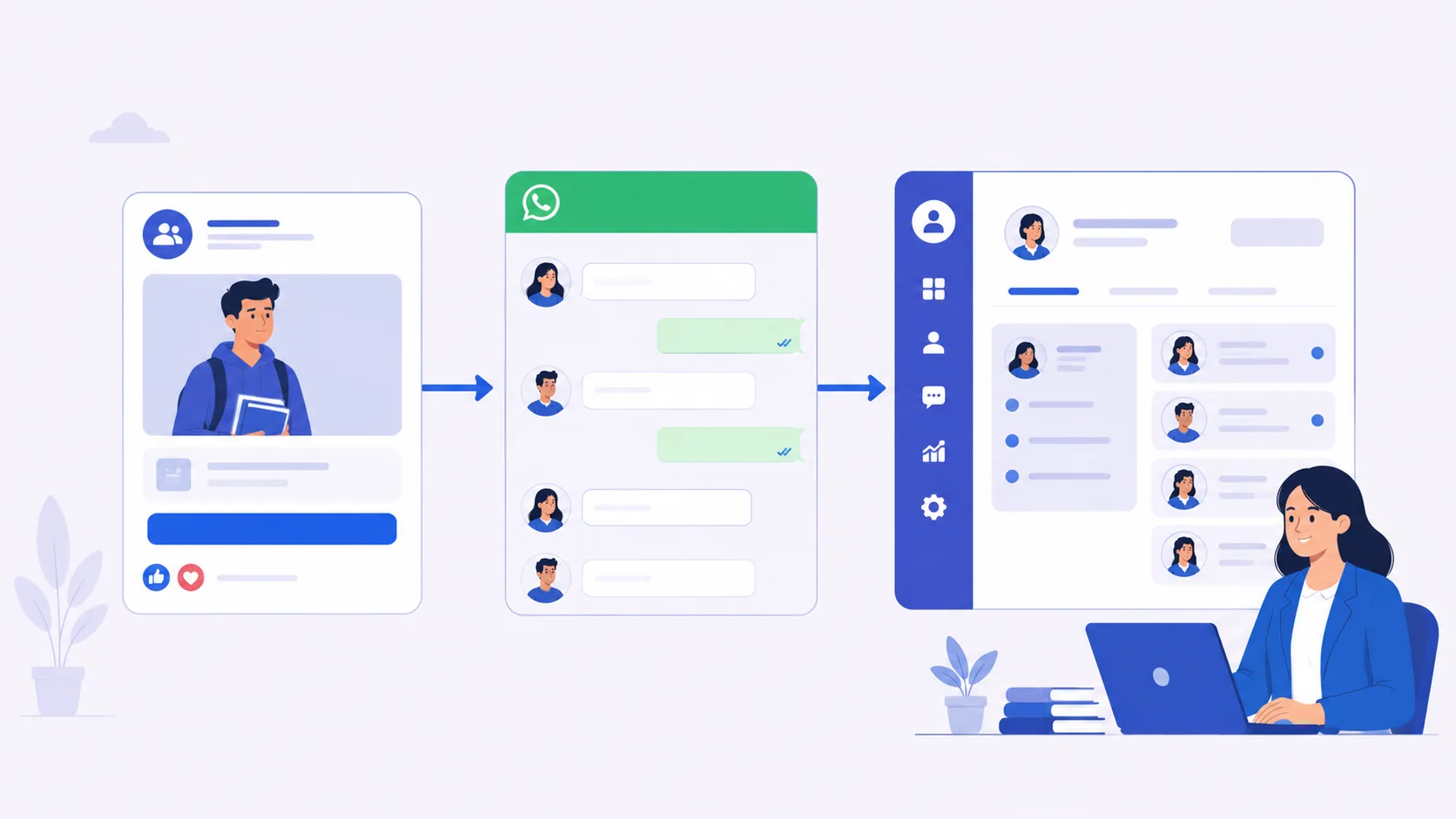
Sync Meta Lead Ads to WhatsApp CRM Natively | ViveLead
Sync Meta lead ads to a WhatsApp CRM the right way: native capture, no BSP markup, own your WABA. India and EdTech …
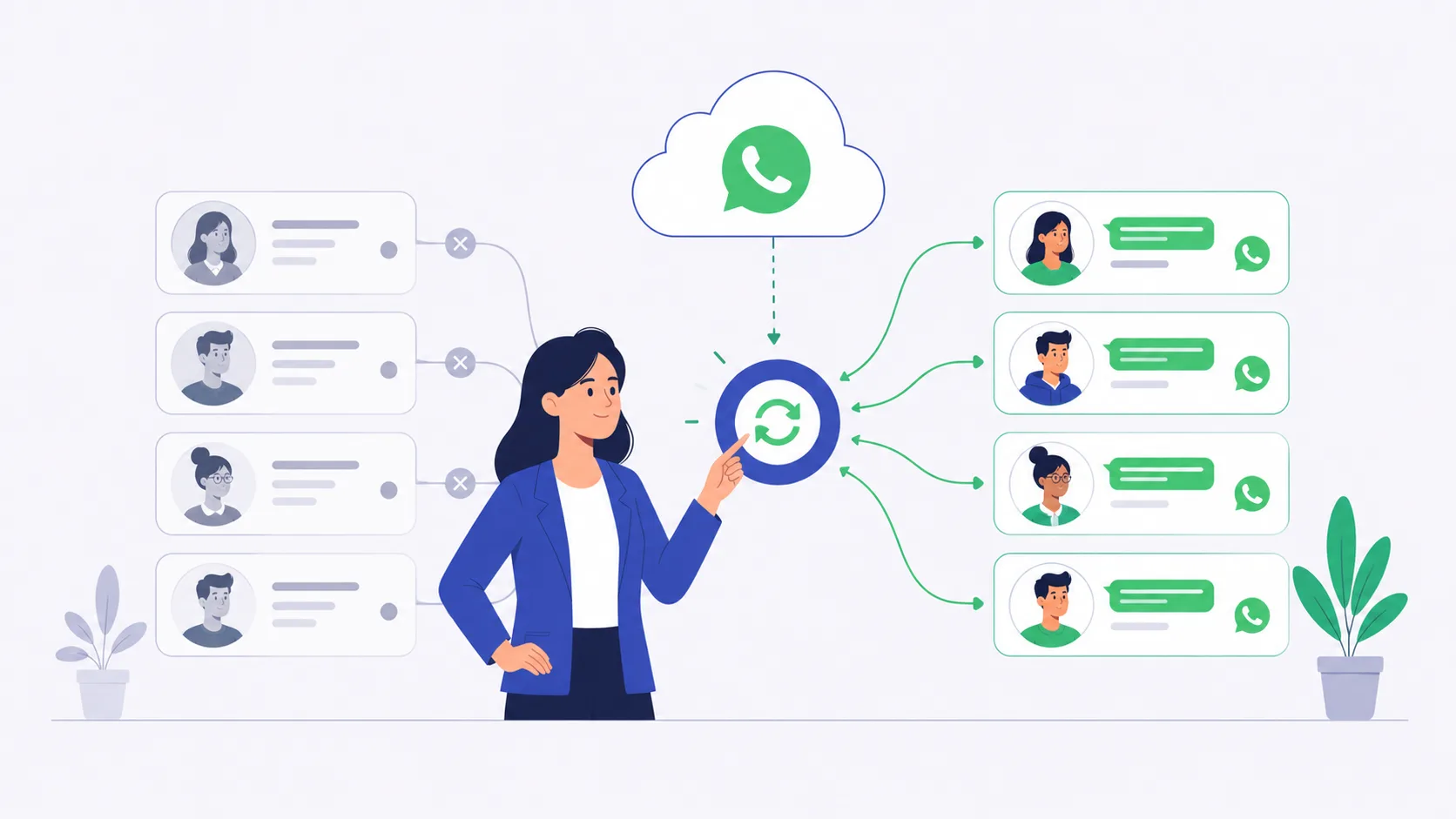
Revive Dead Leads via Official WhatsApp Cloud API | ViveLead
Revive dead leads on the Official WhatsApp Cloud API: the 24-hour rule, current India rates, and how to message old …

EdTech CRM Software India 2026: Real Prices and Hidden Costs
EdTech CRM software for Indian institutes, compared on all-in price, who pays Meta for WhatsApp, demo-gating, DPDP and …